
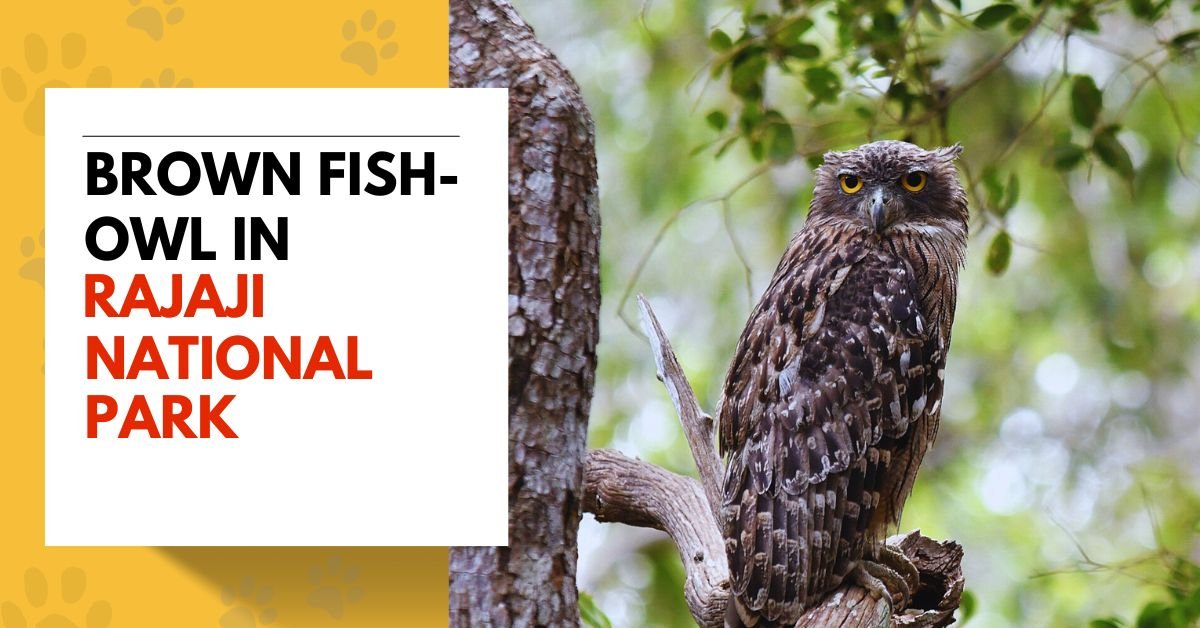
In the heart of India’s wilderness lies a sanctuary that not only boasts diverse flora and fauna but also harbors some of the most captivating avian species. Rajaji National Park, nestled in the foothills of the Himalayas, is a haven for wildlife enthusiasts and bird watchers alike. Among its feathered residents, the Brown Fish-Owl (Ketupa zeylonensis) stands out as a symbol of mystery and majesty.
A Closer Look at the Brown Fish-Owl
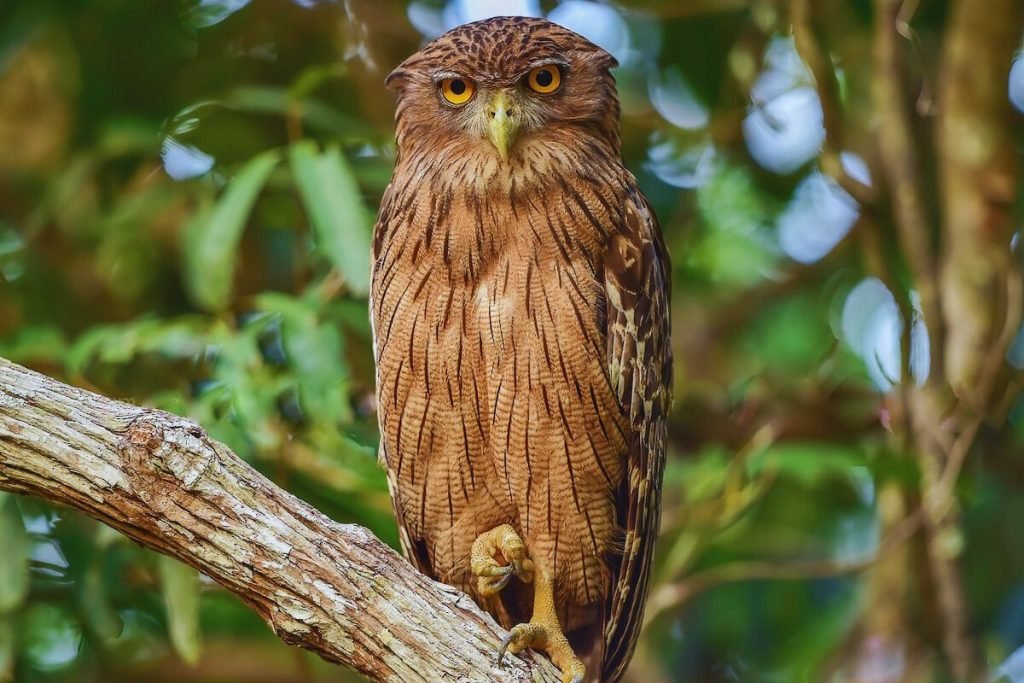
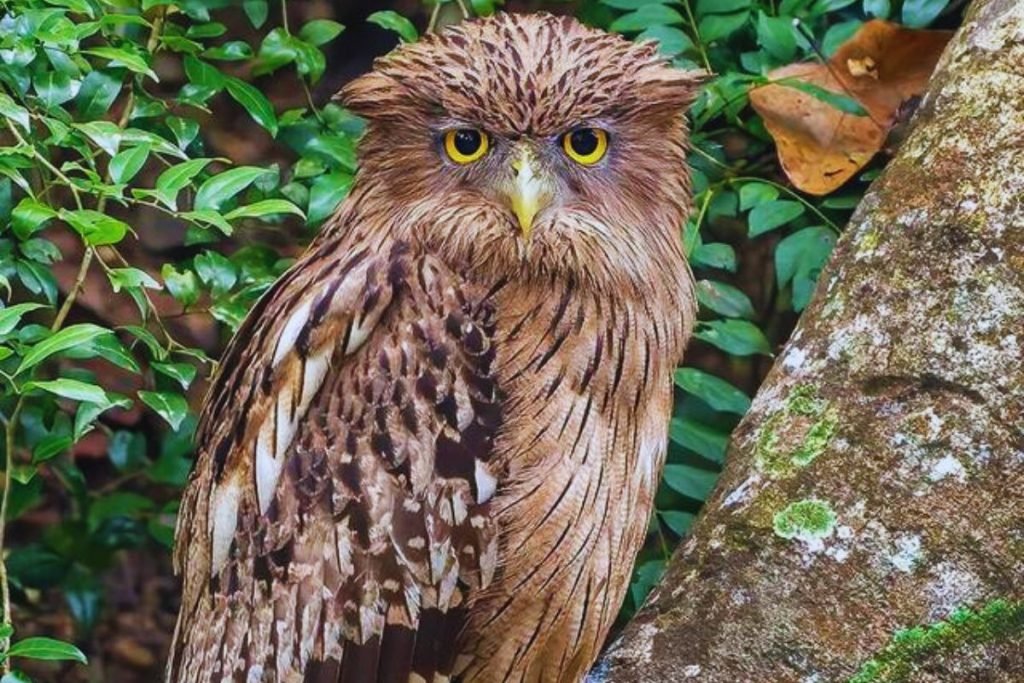
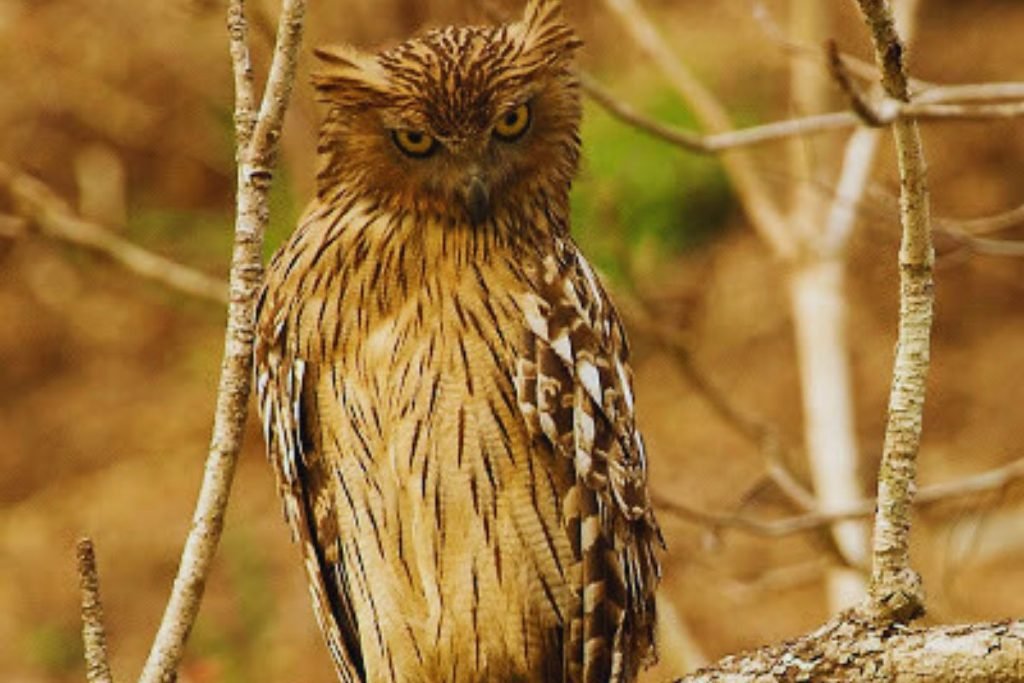
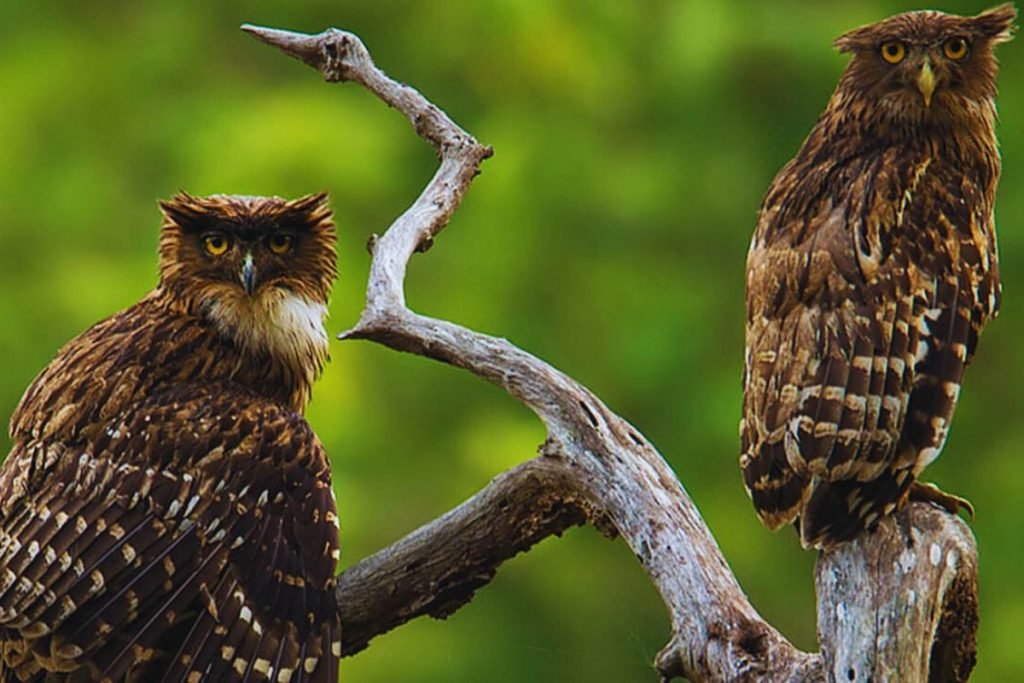
With its distinctive brown plumage and piercing yellow eyes, it is a sight to behold. Endemic to the Indian subcontinent, this nocturnal predator inhabits dense forests and riverine landscapes, making Rajaji National Park an ideal habitat. Measuring around 50 to 60 centimeters in length, these owls possess a formidable presence, often perching silently on tree branches as they scan their surroundings for prey.
The Ecology of Rajaji National Park
Spread across the states of Uttarakhand and Uttar Pradesh, Rajaji National Park encompasses a rich tapestry of ecosystems. From the rugged terrain of the Shivalik range to the tranquil river valleys, the park offers a diverse range of habitats for its inhabitants. For the Brown Fish-Owl, the park’s dense forests provide ample shelter and hunting grounds, while its rivers and streams teem with fish, amphibians, and crustaceans—ideal prey for these skilled hunters.
Behavior and Adaptations
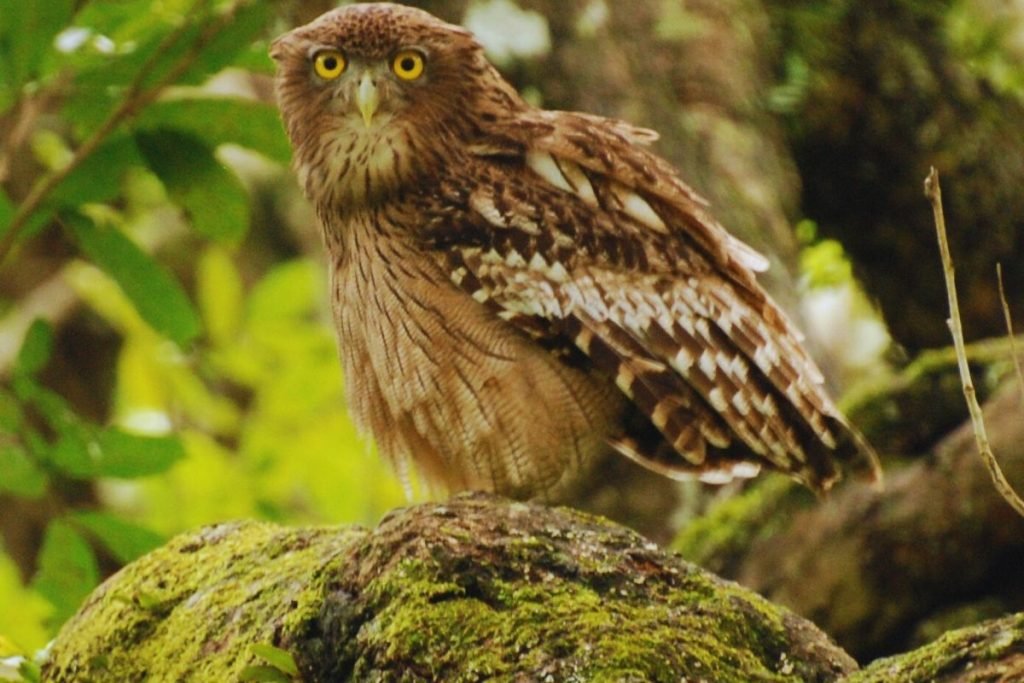
As nocturnal hunters, Brown Fish-Owls possess a remarkable set of adaptations that aid in their survival. Their keen eyesight and acute hearing allow them to detect even the slightest movements in the dark. Stealthy flyers, these owls swoop down on unsuspecting prey with precision, using their powerful talons to secure a meal. Despite their imposing stature, they are elusive creatures, often shrouded in the secrecy of the night.
Conservation Status and Challenges
While this owl is not currently listed as endangered, it faces threats from habitat loss and human encroachment. Rajaji National Park, despite its protected status, is not immune to these challenges. Deforestation, illegal poaching, and disturbances along riverbanks pose significant risks to the owl’s habitat and prey base. Conservation efforts aimed at preserving the park’s ecosystems are crucial for ensuring the long-term survival of this iconic species.
Conclusion
In the realm of conservation, every species plays a vital role in maintaining the delicate balance of nature. The Brown Fish-Owl, with its enigmatic presence, serves as a reminder of the interconnectedness of all life forms. As stewards of the earth, it is our responsibility to safeguard the habitats that sustain these magnificent creatures. Through concerted efforts in conservation and education, we can ensure that future generations will continue to marvel at the sight of the Brown fish owl soaring through the forests of Rajaji National Park.
FAQs About Brown Fish-Owl in Rajaji National Park
1. What is the diet of the Brown Fish-Owl?
It primarily feeds on fish, amphibians, crustaceans, and small mammals. They are adept hunters and rely on their keen senses to locate prey.
2. How can visitors contribute to the conservation of the Brown Fish-Owl?
Visitors can support conservation efforts by adhering to park regulations, minimizing disturbances to wildlife, and participating in eco-friendly activities such as bird-watching tours.
3. Are Brown Fish-Owls strictly nocturnal?
Yes, these are primarily nocturnal hunters. They are most active during the night, utilizing their exceptional night vision and silent flight to hunt for prey.
4. What is the breeding behavior of Brown Fish-Owls?
These are monogamous and typically mate for life. They nest in tree hollows or abandoned nests, laying 1-3 eggs per clutch. Both parents participate in incubating the eggs and raising the young.
5. How can I spot a Brown fish owl in Rajaji National Park?
While spotting a Brown Fish-Owl can be challenging due to their nocturnal nature, visitors can increase their chances by exploring the park’s riverine habitats and listening for their distinctive calls during the evening and early morning hours.